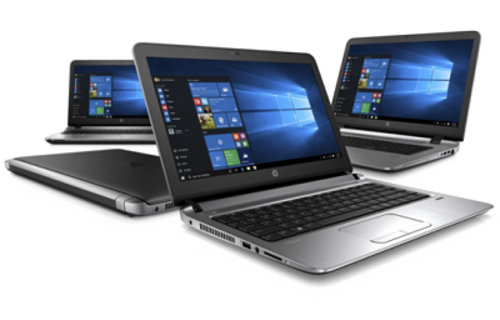
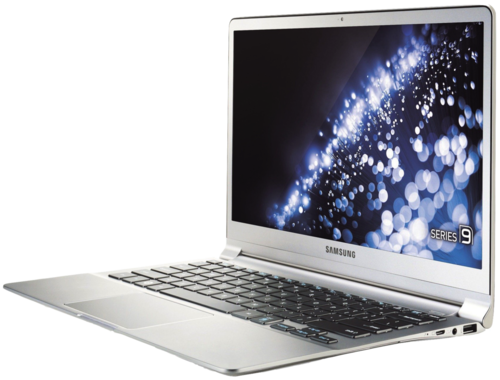
A laptop computer, commonly referred to simply as a laptop or notebook computer, embodies a compact and portable personal computing solution characterized by its 'clamshell' form factor. This design typically comprises a thin LCD or LED screen mounted on the inside of the upper lid and an alphanumeric keyboard situated on the inside of the lower lid. Laptops are adeptly engineered for mobility, folding shut for convenient transportation and unfolding to facilitate usage. The nomenclature 'laptop' derives from its historical usage, as it was originally designed to rest on an individual's lap during operation.
Initially, a distinction existed between laptops and notebooks, with the former being larger and heavier than the latter. However, contemporary iterations, as of 2014, often blur this differentiation. Laptops find extensive utility across diverse domains, serving as indispensable tools in professional environments, educational institutions, gaming arenas, internet browsing, multimedia consumption, and general computing tasks at home.
Comprehensive in their functionality, laptops integrate all essential input/output components and capabilities of traditional desktop computers into a singular unit. This amalgamation includes the display screen, small speakers, keyboard, hard disk drive, optical disc drive, pointing devices (such as touchpads or trackpads), processor, and memory. Many modern laptops are further enhanced with integrated webcams, built-in microphones, and touchscreens, catering to evolving user preferences.
Powering options for laptops encompass internal batteries and external power supplies via AC adapters. Notably, hardware specifications, such as processor speed and memory capacity, exhibit significant variance across different types, brands, models, and price points.
Moreover, design elements, form factors, and construction vary substantially between laptop models, contingent upon their intended usage. Specialized variants include rugged notebooks tailored for construction or military applications, as well as cost-effective models like those pioneered by the One Laptop per Child (OLPC) organization, featuring innovative attributes such as solar charging and semi-flexible components.
Originally conceived as niche solutions for specialized field applications, such as military deployments, accounting tasks, or sales representatives on the move, portable computers evolved into the ubiquitous modern laptop, catering to a myriad of user requirements across various spheres of life.