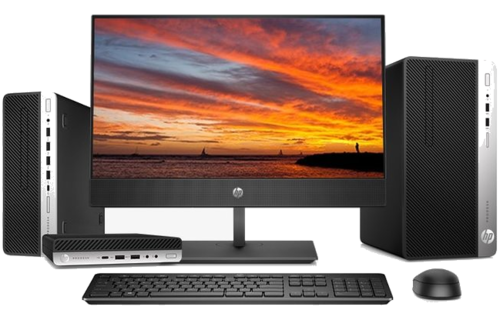
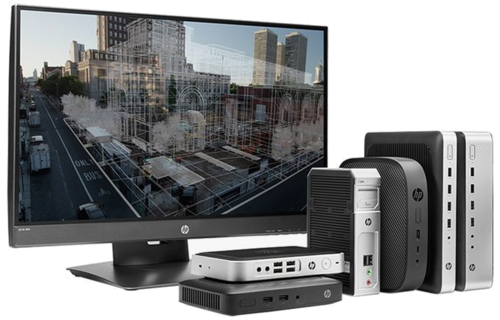
A desktop computer, integral to professional work environments, is a personal computing device engineered for consistent usage within a fixed location, typically positioned on or near a desk or table due to its size and power requirements. Its configuration typically comprises a sturdy case housing essential components such as the power supply, motherboard (featuring a microprocessor as the central processing unit), memory modules, bus interface, and assorted electronic elements.
In addition to the motherboard, the case accommodates disk storage units, commonly comprising hard disk drives, solid-state drives, and optical disc drives. Input devices, namely a keyboard and mouse, facilitate user interaction with the system, while output peripherals including a computer monitor, speakers, and often a printer, deliver visual, auditory, and hard-copy output, respectively.
The orientation of the desktop case may vary, with options including horizontal or vertical positioning, and placement options encompassing beneath, beside, or atop a desk surface.
Recognized for their reliability and performance, desktop computers are indispensable tools in professional settings, facilitating efficient data processing, content creation, communication, and project management tasks. Their robust hardware configurations and stationary nature make them well-suited for prolonged use in work environments requiring consistent access to computing resources and peripherals.